
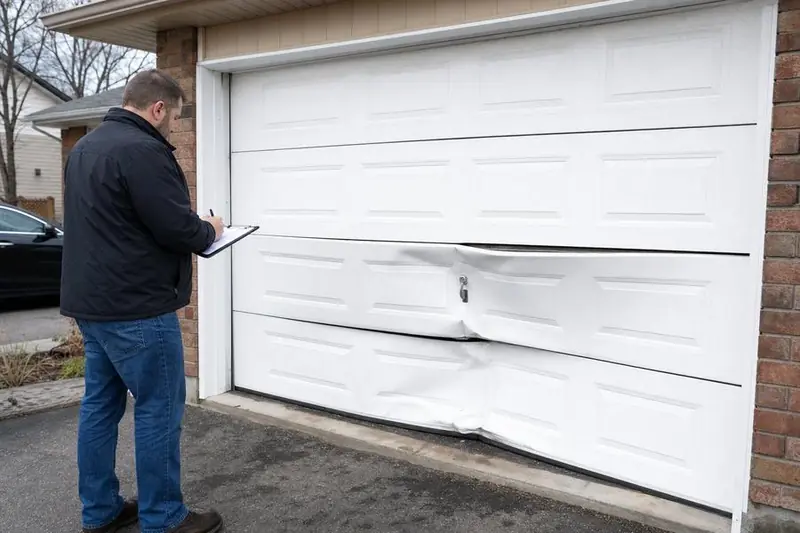
Whether it's a car backing into the door, a windstorm off the river, or an ice dam tearing the track loose, garage door damage happens to Ottawa homeowners every year — and the insurance question always comes down to what actually caused it.
How home insurance treats garage door damage generally
Most standard Ontario homeowner policies treat the garage door as part of the dwelling structure, which means damage from a covered peril — like fire, windstorm, falling objects, or vehicle impact — is typically eligible for a claim, subject to your deductible. Damage from gradual wear, poor maintenance, or normal aging is not something insurance covers, since insurance is designed for sudden and accidental loss, not maintenance issues.
Storm and wind damage: a real Ottawa consideration
Ottawa sees genuine wind events, including derecho-type storms — the May 2022 derecho caused widespread structural damage across the region, and garage doors are one of the more wind-vulnerable parts of a home's exterior due to their large surface area and comparatively lightweight construction. Wind damage to a garage door is generally covered under standard windstorm provisions, but always confirm with your specific insurer, since some policies have separate wind/hail deductibles.
Vehicle impact damage
If a vehicle — yours or someone else's — hits your garage door, this is typically covered under your home policy's "impact by vehicle" peril, and in some cases the at-fault driver's auto insurance may also be liable if the damage was caused by a third party. Document the damage with photos immediately and get a written repair estimate before filing, since insurers generally want cost validation.
Ice, snow load and freeze damage
Ottawa's ice storms and heavy snow loads can crack door panels, bend tracks, or tear opener hardware loose, particularly on older or under-insulated doors. Coverage here depends heavily on cause — sudden ice-storm damage is usually covered, but a door that fails because it wasn't maintained through years of freeze-thaw cycling may be treated as a maintenance issue rather than a covered loss. See our cold-weather spring guide for how Ottawa's winters stress door components over time.
What's typically excluded
- Gradual deterioration, rust, or wear from normal aging
- Damage from lack of maintenance (e.g., a spring that snaps because it was never serviced despite visible warning signs)
- Cosmetic damage that doesn't affect function or structural integrity
- Pre-existing damage not disclosed at policy inception
How to file a garage door damage claim in Ottawa
- Take dated photos of the damage immediately, including any visible cause (branch, vehicle, ice buildup)
- Stop using the door if it's structurally compromised — a damaged door can fail suddenly and unsafely
- Call your insurer to report the claim and get a claim number
- Get a written repair or replacement estimate from a licensed provider — DPS provides these free for Ottawa homeowners and can itemize the estimate the way most adjusters expect
- Keep all receipts and documentation if temporary securing or emergency repair was needed before the full fix
When it makes more sense to pay out of pocket
If the repair cost is close to or below your deductible, filing a claim may not be worthwhile, since claims can affect future premiums or claims history even when the payout is small. For many spring or cable repairs, which run well below typical deductibles, paying directly is often the more practical choice — insurance is generally best reserved for larger losses like a full door replacement after storm or impact damage.
Replacement cost vs. actual cash value coverage
Two different coverage structures affect how much you actually receive for a garage door claim. Replacement cost coverage pays to install a comparable new door without deducting for age or wear, while actual cash value coverage subtracts depreciation, meaning an older door's payout could be substantially less than the cost of a new one. Most standard Ontario homeowner policies default to replacement cost for dwelling structures, but it's worth confirming which structure your specific policy uses, especially if your door is more than 10-15 years old.
Detached garages and outbuildings: different coverage rules
If your garage is a detached structure rather than attached to the main house, it's often covered under a separate "other structures" or "detached private structures" section of your policy, which sometimes carries a lower coverage limit than the main dwelling. Ottawa homeowners with detached garages, common in some of the city's older neighbourhoods, should confirm this sub-limit is adequate to cover a full door and structural repair if needed — underinsured detached structures are a common gap adjusters flag.
Liability considerations when your garage door causes damage to others
Insurance coverage isn't only about damage to your own door — if a malfunctioning door or an improperly secured door causes injury or damage to a visitor, delivery person, or neighboring property, your policy's liability coverage may come into play from the other direction. This is one more reason routine safety sensor testing and prompt spring or cable repair matters beyond simple convenience; a door that's known to be unsafe and causes an incident can complicate a liability claim.
Documentation that speeds up an Ottawa insurance claim
Adjusters move faster on claims that include clear photo timestamps, a copy of the police report for vehicle-impact incidents, and a professional written estimate that itemizes labour and materials separately rather than quoting a single lump sum. Keeping a simple home maintenance log — even informal notes on when the door was last serviced — can also help demonstrate the damage was sudden rather than the result of neglect, which is often the deciding factor in borderline claims.
Reviewing your policy before you need it
The best time to understand your garage door coverage is before anything happens, not while standing in front of a damaged door trying to read fine print on your phone. Pull up your policy's dwelling and "other structures" sections once a year, check your deductible level against typical repair costs, and confirm whether your coverage is replacement cost or actual cash value. A five-minute review during your annual policy renewal can save significant confusion and delay if you ever do need to file a claim.
Working with your adjuster efficiently
Adjusters handle a high volume of claims, and the ones that move quickly tend to be the ones with complete documentation submitted upfront rather than piecemeal. Provide your written estimate, photos, and any relevant reports (police report, weather event confirmation) in a single package when you first file, rather than waiting for the adjuster to request each piece individually — this alone often shaves days off the approval timeline.
FAQ
Will my premium go up if I file a garage door claim?
It can, particularly if you file multiple claims within a short period — ask your insurer about their specific claims-history policy before deciding whether to file for a smaller repair.
Does tenant or condo insurance cover garage doors differently?
Yes, coverage structures differ for condos and rentals — condo corporations often insure the garage structure itself under a master policy, while personal contents inside remain the unit owner's responsibility. Check your specific condo declaration and insurance certificate.
Do I need a professional estimate before filing a claim?
Most insurers require one, and having a detailed, itemized written estimate from a licensed provider tends to speed up claim approval significantly.