
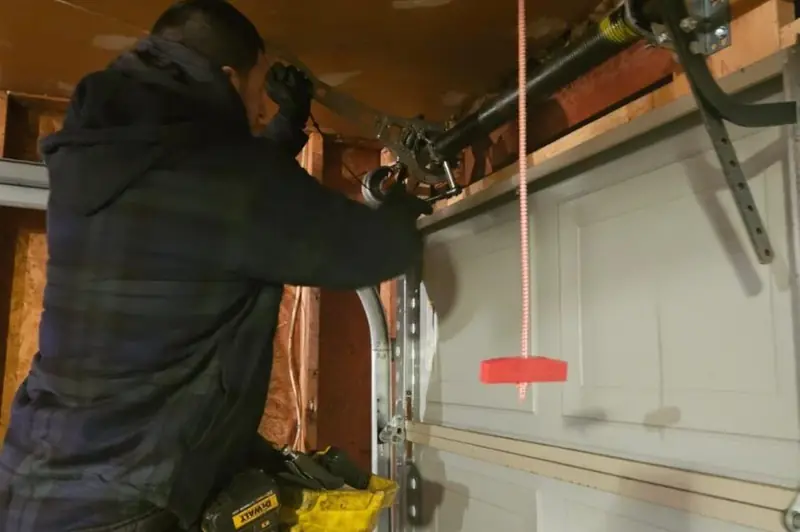
Why a seasonal routine matters more here than elsewhere
A garage door in a mild climate can often go years with minimal attention. A garage door in Ottawa is dealing with sustained sub-zero cold, road salt and brine tracked in on every vehicle, big humidity swings between January and July, and repeated freeze-thaw cycles that stress hardware in ways a gentler climate never does. A basic seasonal check catches the small issues — a stiff hinge, a fraying cable strand, a gapped seal — while they're still cheap, simple fixes.
Fall (September – November): the most important check of the year
This is your last real opportunity to catch problems before winter makes everything worse.
- Inspect the weatherstripping along the bottom and sides for cracking, flattening, or gaps — replace before the first cold snap. See our weather seal guide.
- Test the balance. Disconnect the opener, lift the door halfway by hand — it should stay in place. If it drifts up or falls, the spring tension needs professional adjustment.
- Lubricate rollers, hinges, and springs with a garage-door-specific lubricant, not WD-40 (which is a cleaner, not a lasting lubricant).
- Check the auto-reverse safety feature by placing a piece of wood flat on the ground where the door closes — it should reverse on contact.
- Look for early signs of spring fatigue — see our extreme cold and spring health guide.
Winter (December – March): monitoring, not major work
Winter is mostly about watching for trouble rather than doing heavy maintenance — it's not the season to attempt DIY repairs in an unheated garage.
- Clear snow and slush promptly from the base of the door to prevent it freezing to the floor — see our guide on a garage door frozen to the ground.
- Wipe down hardware periodically to remove road salt residue before it pits metal — see our post on road salt damage.
- Never force a frozen or stuck door with the opener — stop immediately if it doesn't move within a second or two.
- Listen for new noises — cold makes existing wear more audible, and a new grinding or popping sound is worth investigating before it becomes a breakdown.
Spring (April – June): repair the winter's wear
Spring is when the cumulative toll of winter shows up — melting snow reveals rust, and hardware that was fine in October may be worn after months of cold and salt.
- Full hardware inspection for rust, pitting, or corrosion on cables, springs, and brackets.
- Clean the tracks of accumulated grit, sand, and old lubricant residue from winter.
- Check for water damage at the bottom panel from months of snow and slush contact.
- Re-lubricate moving parts once things have dried out from the spring thaw.
Summer (July – August): the easy season, don't skip it
Summer is the lowest-stress season for a garage door, which makes it the ideal time for any repairs or upgrades you've been putting off.
- Tackle any deferred repairs — spring replacement, opener upgrades, panel repairs — while conditions are easiest to work in.
- Check the opener's settings — travel limits, force settings — since summer heat can also cause slight expansion that shifts these over time.
- Inspect and clean photo-eye sensors — summer dust and pollen build-up is a common, overlooked cause of sensor malfunctions. See our sensor troubleshooting guide.
- Consider a full tune-up before fall, especially if your door is more than a few years past its last professional service.
What to leave to a professional every time
Torsion spring adjustment or replacement, cable replacement, and track realignment all involve components under significant tension or precise geometry. These aren't places to save money with a DIY attempt — see our DIY vs professional repair guide for a clearer breakdown of where the line sits.
Building a simple log so you don't lose track
A short written log — even just notes in your phone — of when you last lubricated, inspected, or serviced your door makes this whole schedule far easier to actually stick to. Note the date, what you checked, and anything you noticed (a new squeak, slight rust, a stiff hinge). Over a couple of years this becomes genuinely useful: it tells you and any technician exactly how the door has aged and what's overdue.
Signs your door needs attention outside the normal schedule
- Noticeably more effort needed to lift the door manually than a few months ago.
- Any new noise that wasn't there before — see our dedicated noise diagnosis guide for what different sounds usually mean.
- The door taking visibly longer to open or close, or moving unevenly.
- Visible rust, pitting, or corrosion appearing between scheduled checks, especially after a heavy salt season.
None of these need to wait for your next seasonal check — address them as they come up.
How maintenance protects your warranty too
Beyond preventing breakdowns, staying on top of basic maintenance is often exactly what your manufacturer or installer warranty expects from you as a homeowner. A claim tied to a component that failed after years of zero lubrication or attention can sometimes be viewed differently than one that failed despite reasonable upkeep. See our warranty guide for more on how coverage and maintenance intersect.
The payoff over the life of the door
None of these seasonal tasks take more than 20-30 minutes each, and most of them cost nothing beyond a bit of lubricant. Compared against the cost and inconvenience of an emergency spring failure or opener breakdown in the middle of a January cold snap, a consistent seasonal routine is one of the best returns on time you can get from routine homeownership.
A one-page version for the fridge or garage wall
If the full seasonal breakdown feels like a lot to remember, the condensed version is: lubricate twice a year, look for rust and check the balance once a year (ideally in fall), clear snow and ice from the door's base all winter, and address any new noise or stiffness as soon as you notice it rather than waiting for the next scheduled check. Everything else in this guide supports and expands on those four core habits.
How this schedule differs for a heavily used household
A household running the garage door many times a day — multiple drivers, a home-based business with frequent deliveries, teenagers coming and going constantly — puts significantly more cycles on the hardware each year than an average household. If that describes your situation, consider shifting from an annual professional check to roughly every 6-8 months, and pay closer attention to hardware wear indicators between visits, since components simply reach their cycle-based wear limits faster under heavier use.
Aligning maintenance with other home upkeep
Many Ottawa homeowners already do a fall home-readiness pass — gutters, furnace filter, weatherstripping on doors and windows. Folding the garage door's fall check into that same seasonal routine is an easy way to make sure it doesn't get forgotten, since it's tackled alongside habits you're already maintaining rather than as a separate, easily-skipped task.
Getting started if you've never had a schedule before
If none of this has been part of your routine so far, don't try to catch up on years of missed maintenance in one weekend. Start with a single seasonal check this month, lubricate what needs it, and build from there — a partial routine started today beats a perfect routine that never actually begins.
What we check that goes beyond a typical DIY routine
Beyond the lubrication and visual checks a homeowner can reasonably do, a professional visit typically includes spring tension measurement, cable wear assessment at points that aren't easily visible without partial disassembly, and opener force-setting verification against manufacturer specifications. These checks catch issues well before they'd show up as a visible symptom, which is the real value of pairing your own seasonal habits with an annual professional visit rather than relying on either alone.
Tools worth keeping in the garage for quick checks
A short list of inexpensive tools makes DIY seasonal checks much easier: a can of garage-door-specific lubricant (not household oil or WD-40, which attracts dust and doesn't hold up as well over time), a soft cloth for wiping down tracks, a flashlight for checking spring coils and upper hardware, and a basic socket set for confirming bolts are snug. None of this requires a serious tool investment, and having them on hand removes the friction that often causes seasonal checks to get postponed indefinitely.
What "lubricate" actually means in practice
Lubrication isn't a heavy application — a light coating on hinges, rollers (if not sealed/nylon type), and the spring itself is sufficient; over-lubricating just attracts more dust and grime, which can actually accelerate wear rather than prevent it. Wipe away any excess after application rather than leaving a heavy visible coating, and avoid getting lubricant on the tracks themselves, since a slick track surface can interfere with roller grip rather than help it.
If you'd rather have this whole schedule handled for you, we offer full maintenance visits across Ottawa, Kanata, Barrhaven, and every neighbourhood in between. Call (613) 884-1488 to book a seasonal check.