
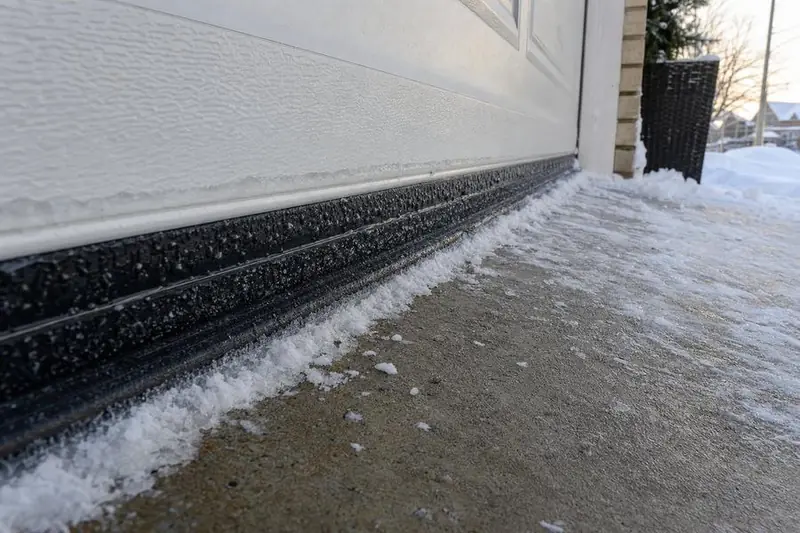
Why this happens constantly in the National Capital Region
Ottawa's winter weather pattern is almost custom-built to cause this problem. We get genuine deep cold, but we also get regular warm-ups — a January thaw, a sunny afternoon that pushes temperatures above freezing, rain-on-snow events — followed by a hard refreeze overnight. Every one of those cycles is an opportunity for meltwater to seep under the door's bottom seal and refreeze solid against the concrete slab, effectively gluing the door shut.
Driveways that slope slightly toward the garage, common on plenty of properties in Nepean and parts of Orléans, make this worse because meltwater runs toward the door instead of away from it. Garages without a proper threshold seal are especially prone to it.
What NOT to do first
- Don't hammer on the opener button repeatedly. If the door doesn't lift within a second or two of trying, stop immediately. Continuing to try can strip the drive gear inside the opener, snap a belt, or bend the top panel where the arm connects.
- Don't pry at the bottom seal with a metal tool. This tears the rubber astragal and often scratches or dents the bottom panel.
- Don't pour hot water on it. It feels like the obvious fix, but hot water on cold concrete and steel often refreezes into an even harder, thicker layer of ice within minutes, and repeated hot-cold cycling can crack concrete over time.
The safe way to free a frozen door
- Disconnect the opener. Pull the manual release cord (usually a red handle hanging from the trolley) so you're not fighting the motor while you work.
- Use a plastic scraper or ice melt product along the visible ice line at the bottom of the door, working gently rather than forcing it.
- Apply a de-icer made for exterior use (calcium chloride-based products work faster than rock salt in cold temperatures) along the seam where the door meets the floor, and give it a few minutes to work.
- Try lifting the door manually with steady, even pressure once the ice has softened — don't yank it.
- Reconnect the opener only once the door moves freely by hand through its full range.
If the door still won't budge after this, or if you hear cracking, grinding, or see the panel flexing unnaturally, stop and call a technician rather than risk damaging the door or hurting yourself.
What if the opener already tried and failed?
If you already pressed the button a few times before reading this (understandable — it's usually the first instinct), listen for a grinding or clicking sound the next time you test it once the door is free. That can indicate the drive gear has been damaged and needs replacement. It's a straightforward, affordable fix if caught early, but running a damaged gear indefinitely can eventually take out the whole motor. Our guide on opener troubleshooting covers the warning signs.
Preventing it going forward
A few changes make a real difference across an Ottawa winter:
- Install or replace a bottom threshold seal that blocks meltwater from running under the door rather than relying on the door's own weatherstripping alone.
- Clear snow and slush away from the base of the door after every storm rather than letting it sit and melt against the seal.
- Check that downspouts and grading direct water away from the garage entrance rather than toward it.
- Have the weatherstripping inspected each fall — cracked or flattened seals let in more moisture and freeze more easily. See our weather seal guide for what a good seal should look like.
For the bigger picture on keeping your door reliable all season, read our winter maintenance guide and extreme cold and spring health post. We serve this exact issue constantly across Ottawa, Nepean, and Orléans every winter.
What a threshold seal actually does and why it helps
A threshold seal is a raised rubber or vinyl strip installed along the garage floor directly under where the door closes, forming a dam that keeps meltwater, wind-driven snow, and small debris from getting under the door in the first place. Unlike the door's own bottom weatherstripping, which seals against the floor as the door closes, a threshold seal addresses the floor side of that junction — exactly the spot where freeze-thaw meltwater tends to collect and refreeze. For a driveway that slopes even slightly toward the garage, this single addition often prevents the freezing-to-the-floor problem from recurring at all.
Ice buildup on the outside vs the inside
It's worth distinguishing two different ice problems that both show up around garage doors in Ottawa. Ice on the outside apron, from driveway meltwater refreezing, is what typically causes a door to freeze to the ground. Ice or frost forming on the inside face of the door itself is usually a condensation issue tied to insulation and humidity rather than meltwater — see our post on insulated vs non-insulated doors if that's the pattern you're seeing instead.
A seasonal habit that prevents most repeat problems
The homeowners who deal with this the least tend to do one simple thing consistently: after any storm or thaw event, they clear slush and ice away from the base of the door before it has a chance to refreeze overnight, rather than dealing with it the next morning when it's already solid. It takes two minutes with a shovel or ice scraper and prevents the far more frustrating scenario of a door that won't move at all when you're trying to leave for work.
When repeated freezing points to a bigger issue
If your door freezes to the ground repeatedly every single time there's a thaw-freeze cycle, despite reasonable snow clearing, it's worth having the grading and drainage around your garage entrance looked at, not just the door itself. A driveway that channels water directly at the garage rather than away from it will keep causing this no matter how well-maintained the door and seals are.
What professional de-icing service looks like, if you'd rather not DIY
If dealing with a frozen door yourself isn't appealing, or if it's become a recurring problem despite your best efforts, we can address both the immediate thaw and the underlying cause — inspecting the seal, threshold, and grading — in a single visit rather than you having to repeat the manual thawing process every time conditions align to cause it again.
When a frozen door points to a bigger issue
If freezing to the ground has become a recurring, near-weekly problem rather than an occasional cold-snap event, that pattern usually means something structural — grading, drainage, or a failed seal — needs correcting rather than continuing to manage the symptom every time it happens. Recurring problems are worth a proper inspection rather than repeated manual workarounds all winter long.
Understanding why some homes are more prone to this than others
Homes with a garage floor that sits slightly lower than the surrounding driveway grade, or with a threshold that's settled slightly over the years, tend to collect and hold more meltwater right at the door's base — exactly the setup that leads to repeated freeze-bonding. If you've noticed water pooling at your garage entrance during a thaw even in milder weather, that's a strong early indicator that grading correction, not just seal replacement, is the more complete fix.
A note on ice buildup versus true freeze-bonding
It's worth distinguishing a door frozen shut by a thin ice-bond at the seal (the common scenario covered above) from a door genuinely obstructed by a substantial ice or snow buildup underneath it from an eavestrough or roof runoff issue. The second scenario often needs a look at your home's drainage and roof runoff pattern near the garage, since it will keep recurring every time conditions align regardless of how well you manage the door's seal itself.
How your garage's orientation affects freeze risk
A garage door facing north or shaded most of the day by the house itself, mature trees, or a neighbouring structure gets far less direct sun to help melt ice at the threshold than a south-facing door exposed to full winter sun. If your garage rarely gets direct sunlight on its door, that alone explains why freeze-bonding might happen to you more often than it does to a neighbour with a sun-exposed door of the same age and seal quality, even under otherwise identical weather.
Weatherstripping types and how they handle ice differently
Bottom seals come in a few common profiles — bulb-style, T-style, and beaded — and they don't all handle repeated freeze-thaw cycling the same way. A bulb-style seal that's become flattened or cracked from years of compression is more prone to trapping and holding meltwater against the threshold than a fresh seal with its full rounded profile intact, which is one more reason seal replacement is often the most effective single fix for a chronically freezing door.
Working with, not against, the InstaHeat-style options
Some homeowners in colder parts of the region install a resistive heat cable along the base of the door threshold, similar to roof or gutter de-icing cables, specifically to prevent freeze-bonding in problem spots. This is a reasonable targeted solution for a garage with a known chronic freezing issue where grading and seal fixes alone haven't fully resolved it, though it does add a small amount to your winter electrical usage.
If your door won't free up safely, call (613) 884-1488 — we'll get it moving without damaging the seal, the panel, or the opener.