
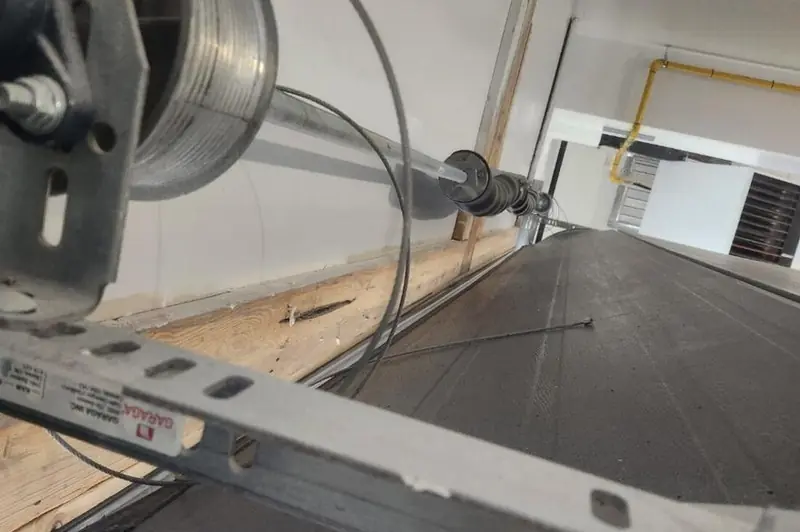
The hidden cost of a salted driveway
Ottawa uses a lot of road salt and de-icing brine every winter, and for good reason — it keeps roads and driveways safe. But every time a salted vehicle pulls into the garage, it brings a load of chloride-laden slush with it that drips onto the floor and, over the course of a winter, works its way onto the door's lower hardware. Boots do the same thing on a smaller scale. This is one of the most common, least talked-about causes of premature garage door hardware failure we see across the region.
Where the damage actually shows up
- Bottom brackets and rollers. These sit lowest and take the most direct exposure to pooling brine. Rust here can eventually seize a roller or weaken the bracket that holds a cable under tension.
- Cables. Corrosion inside the individual strands of a lift cable isn't always visible from the outside, but it weakens the cable's strength. A corroded cable can snap under load with far less warning than a slowly fraying one.
- Torsion springs. If a spring is mounted low, or if the garage floor doesn't drain and brine sits, rust can pit the coil surface, creating stress points that accelerate fatigue failure.
- Track sections near the floor. Pitting and rust buildup here can make the rollers bind, causing jerky movement and extra strain on the opener.
- Hinges on sectional doors. Repeated flexing of a corroding hinge accelerates cracking, especially at the pivot point.
Why this hits Ottawa harder than milder climates
The combination of heavy road salt use, a long winter season, and frequent freeze-thaw cycles that keep meltwater and brine liquid and mobile (rather than staying frozen and inert) means Ottawa garages see a longer window of active corrosion exposure each year than cities with shorter winters. Homes with driveways that funnel runoff toward the garage — common on sloped lots in parts of Nepean and Orléans — see it worse than flat-lot properties.
Simple habits that cut the damage significantly
- Rinse your vehicle's undercarriage periodically, especially after a heavy salt application, rather than letting brine drip in the garage all winter.
- Keep the garage floor from pooling liquid — a floor drain helps if you have one; otherwise, towel up standing brine periodically.
- Wipe down visible hardware — tracks, the bottom bracket, hinges — every month or so during winter with a dry cloth to remove salt residue before it has time to pit the metal.
- Apply a light coat of garage-door-safe lubricant to hinges, rollers, and the track periodically; it displaces moisture and slows corrosion in addition to reducing noise. Avoid heavy grease, which attracts grit.
- Upgrade to galvanized hardware when replacing worn parts — it costs a little more but resists corrosion far better than bare steel over the long run.
When to stop DIY-ing it and call a technician
Surface rust you can wipe or lightly sand is manageable yourself. But if you see pitting, flaking, or rust streaks on a cable, spring, or bracket that bears load, that's a safety call, not a cosmetic one. A corroded cable or spring can fail suddenly and without much additional warning. If in doubt, have it inspected — we check this as part of every maintenance visit.
This ties closely into general seasonal upkeep — see our winter maintenance guide and our broader year-round maintenance schedule for Ottawa for the full picture of what to check and when. If a spring has already failed, our spring replacement cost guide covers what to expect.
Why cables deserve extra attention
Of everything road salt affects, corroded cables are the component we're most cautious about. Unlike a rusty bracket, which you can usually see and assess, corrosion inside the individual strands of a wound steel cable can be invisible from the outside while still meaningfully weakening the cable's load capacity. A cable under constant tension that's been quietly corroding for years can fail with much less warning than a slowly fraying one that shows visible wear. This is one of the reasons we specifically check cable condition, not just visible rust on brackets, during any winter or spring inspection.
Floor drainage matters more than most homeowners realize
If your garage floor doesn't have a working drain, or if the slab has settled unevenly over the years and pools water in one corner, that's usually the corner where hardware corrodes fastest. A simple grading fix, a floor drain retrofit, or even just being diligent about mopping up standing brine after a storm meaningfully extends the life of nearby tracks and brackets.
What we look for on a salt-damage inspection
- Pitting or flaking rust on the bottom bracket and rollers closest to the floor.
- Discoloration or rust streaks running down from a hinge or track section.
- Any stiffness or binding in rollers that used to move freely.
- Visible corrosion on cable strands, particularly near the bottom fixture points.
- Whether the spring, if mounted low, shows any pitting along the coil.
Most of these are quick, low-cost fixes when caught early — a full hardware replacement is a very different, more expensive conversation if corrosion is allowed to progress for several winters unchecked.
A note on de-icing products near the garage
Some de-icing products are more corrosive to metal than others. Calcium chloride and magnesium chloride products are generally less damaging to concrete and nearby metal than traditional rock salt (sodium chloride) used in heavy volumes, though all of them contribute some chloride exposure. If you apply your own ice melt right at the garage threshold, a less aggressive product there specifically can modestly reduce how much chloride ends up on your door's hardware over a winter.
How salt damage differs from ordinary rust
Ordinary surface rust, from ambient humidity alone, tends to form a relatively even, slow-progressing layer that's mostly cosmetic in its early stages. Chloride-accelerated corrosion from road salt tends to be more aggressive and more localized — concentrated exactly where brine drips and pools rather than spread evenly, and it can undermine metal integrity faster than humidity-only rust at a similar-looking stage. This is part of why a bracket that looks only lightly rusted from salt exposure can sometimes be more structurally compromised than its appearance suggests, and why we recommend a hands-on check rather than judging purely by the visible surface.
The vehicle side of the equation
It's not only the door hardware taking on damage — your vehicle's undercarriage is dropping salt and brine onto the garage floor every time you pull in during winter. Beyond protecting your door hardware, periodically rinsing your vehicle's undercarriage (many car washes offer this as an add-on) reduces the total chloride load being introduced into the garage environment in the first place, which benefits both your vehicle's longevity and your garage hardware's.
What a professional inspection actually checks for
During a maintenance or inspection visit, we look specifically at the bottom bracket and rollers for pitting, run a visual and tactile check along visible cable strands, check spring coils if accessible and visible, and assess whether track sections near the floor show corrosion-related binding. Catching this early, often during a routine seasonal visit rather than a dedicated "salt damage" call, is usually the most cost-effective way to stay ahead of it before any single component actually fails.
A simple year-end habit that pays off
As winter transitions to spring, a thorough rinse and inspection of the door's lower hardware — after the bulk of salt season has passed but before everything gets tucked away and forgotten until next winter — is one of the highest-value few minutes you can spend on garage door upkeep all year. It's the single easiest point in the calendar to catch and address salt-related wear before it compounds into next season's problem.
Why some hardware finishes hold up better than others
Not all hardware finishes resist chloride exposure equally — a basic zinc-plated finish offers meaningfully less long-term protection than a higher-grade galvanized or powder-coated finish on the same component type. When replacing hardware in a garage with heavy winter salt exposure, asking specifically about the finish grade, not just the part itself, is a small detail that can meaningfully extend the replacement's service life.
If you've noticed rust, pitting, or hardware that's started binding, call (613) 884-1488 for a free inspection — catching salt damage early is a lot cheaper than replacing a cable or spring that's already failed.