
The tradeoff in one sentence
A single double door is simpler and generally less expensive; two single doors cost more but give you redundancy, more design flexibility, and independent operation. Neither is objectively "better" — the right answer depends on your budget, your garage's use, and the look you're after.
Cost comparison
A double-wide door (commonly 16 feet) typically costs less than two individual single doors (each roughly 8-9 feet) of similar material and insulation quality, mainly because you're paying for one opener, one track and spring system, and one continuous panel run instead of duplicating the mechanical components twice. If budget is the primary driver, a single double door usually wins.
That said, two single doors don't require doubling every cost — openers for single doors are often less expensive individually, and some homeowners phase the installation, replacing one door now and the second later, which a single double door doesn't allow.
Redundancy: the case for two singles
This is the most underrated advantage of two single doors. If a spring snaps or the opener fails on one door, the other remains fully functional — you're not locked out of using the garage entirely, and you're not stuck without vehicle access while waiting for a repair. With a single double door, any mechanical failure affects both parking spaces until it's fixed. For households with two vehicles used for daily work commutes, that difference can matter a lot in the middle of an Ottawa winter when a spring is more likely to fail anyway.
Curb appeal and design flexibility
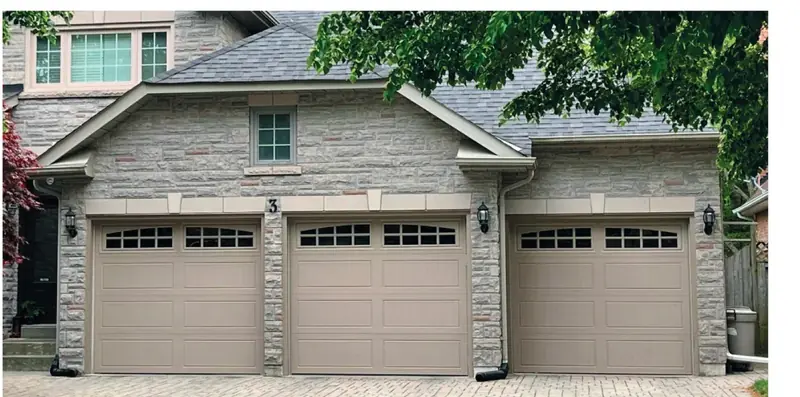
Two single doors open up design options a double door can't match — different widths for asymmetrical garages, contrasting or complementary colours on each door, and a more custom, boutique look that many higher-end homes across areas like Rockcliffe Park or newer executive-style builds in Kanata Lakes use to stand out. A single double door reads as more traditional and streamlined, which suits a lot of standard suburban architecture just fine, but offers less room for visual distinction.
Structural and insulation considerations
A double door spans a wider opening, which means the header above it needs to be engineered for a longer span — a structural detail your builder or a structural engineer handles at construction, not something to worry about when simply replacing an existing door. From an insulation standpoint, both configurations perform similarly if properly sealed; the combined perimeter seal length of two single doors is marginally longer than one double door's perimeter, but in practice seal quality and maintenance matter far more than this small difference. See our guide on insulated vs non-insulated doors for how to think about R-value regardless of configuration.
Maintenance and repair implications
Two single doors mean two sets of springs, two openers, two sets of hardware to maintain — more individual components, but each one is simpler and cheaper to service or replace on its own. A double door's spring system carries more load per spring set given the wider, heavier panel, meaning spring replacement on a double door is typically a bigger job (and cost) than on a single. Track alignment on a double door across a wide span also needs more careful attention, since a slightly warped track has more length to reveal a problem.
What most Ottawa homeowners end up choosing
For a straightforward two-car garage replacement where budget matters and there's no strong architectural reason to differentiate, a single double door remains the more common, cost-effective choice across the region. Households that value redundancy — especially those relying on the garage for daily work commutes through winter — or want a more distinctive curb-appeal statement often choose two singles instead. There's no wrong answer; it comes down to priorities.
For style options either way, browse our Door Guide, and see our post on garage door colours that boost Ottawa curb appeal if design is a driving factor in your decision.
Opener sizing differs between the two configurations
A single wide double door needs one opener strong enough to lift the entire heavier panel run, which typically means a higher-rated motor than either of two single-door openers would individually need. Two single doors each get their own appropriately sized, often more modest opener. This doesn't change the total cost dramatically either way, but it's worth knowing that a double door's opener is doing meaningfully more work per cycle than a single door's opener would.
What happens during a repair visit differs too
With two single doors, a technician can often fully repair one side while the other remains completely usable — genuinely convenient if you need vehicle access during the repair window. With a single double door, any repair typically takes the whole opening out of service until it's finished, since there's only one mechanical system to work on. For households that can't easily go without garage access even temporarily, this is a real practical consideration beyond the upfront cost comparison.
Aesthetic middle ground: two doors, matched design
Some homeowners choose two single doors but specify identical width, colour, and panel style for each, essentially getting the redundancy benefits of two separate systems while still presenting visually like a coordinated pair from the street. This is a common approach on higher-end custom builds where both the practical and aesthetic considerations matter.
Talking through your specific garage layout
The right choice often becomes obvious once you look at your actual opening, budget, and how you use your vehicles day to day. If you're building new or doing a significant renovation where the opening size itself is still flexible, this decision is worth making early, since it affects the header structure above the opening, not just the doors themselves.
Insurance and claims considerations
With two independent single doors, a covered damage event (say, a tree branch during a storm) affecting one door typically doesn't touch the other, simplifying a claim and repair to just the affected unit. With a single double door, damage to any section of that wide panel run usually means addressing the whole door's alignment and balance, since panels interconnect across the full width. This is a minor point compared to the bigger cost and lifestyle factors above, but worth knowing if you're the type of homeowner who thinks through worst-case scenarios in advance.
Resale perception: does configuration matter to buyers?
Most buyers don't have a strong pre-existing preference between a double door and two singles — what matters far more to a buyer's impression is the condition, style, and colour of whatever configuration is already there. If you're deciding purely with resale in mind, matching what's typical for your specific neighbourhood and home style is a safer bet than choosing an unusual configuration purely because you personally prefer it.
Getting a firm quote for your specific opening
Because the cost comparison depends heavily on your exact opening width, existing structural conditions, and chosen materials, a general cost rule of thumb only goes so far. The most useful next step is getting firm, itemized quotes for both configurations against your actual garage, so you're comparing real numbers rather than estimates.
The bottom line for most households
For most typical Ottawa homes with a standard two-car garage, the choice ultimately comes down to budget and personal preference more than any objectively "correct" answer — both configurations serve daily life well when properly installed and maintained. What matters most is choosing quality materials and a careful installation regardless of which layout you land on.
A note for growing families
If you're currently a one-vehicle household but expect to need two-vehicle capacity in the coming years, it's worth planning your garage configuration with that future need in mind now, since retrofitting an opening from single to double width later is a significantly larger structural project than getting the configuration right during an initial build or major renovation.
How this decision affects your home's overall energy profile
A single wide double door has less total seam length (the perimeter where air can potentially leak) relative to its opening size than two separate single doors covering the same total width, since two doors mean two full sets of edges and seals rather than one. This is a genuinely minor factor in most energy comparisons, but for a household prioritizing every reasonable efficiency gain, it's one more small data point favouring a single double door over two singles of equivalent total width.
Practical storage and workspace implications
Two single doors, particularly if one is used less frequently for vehicle parking, sometimes allow a homeowner to dedicate that side more fully to a workshop or storage setup with a more clearly defined boundary than a single wide opening provides. If your garage doubles as workspace beyond just vehicle storage, this practical division is worth factoring into the decision alongside the cost and noise considerations already covered.
Weighing this decision for a renovation or new build? Call (613) 884-1488 and we'll walk through both configurations for your specific garage layout and budget.