
What "off track" actually means
A garage door runs on rollers that travel inside vertical and curved horizontal tracks mounted to the garage frame. When people say a door is "off track," they usually mean one of two things: the rollers have physically popped out of the track channel, or the track itself has become bent, warped, or loose enough that the rollers no longer travel smoothly through it. Both produce a door that looks crooked, sticks partway through its cycle, or refuses to move at all.
Common causes we see across Ottawa
- Impact. A vehicle backing into the door, a snowblower or ladder knocked into the track, or even a hard-thrown object can bend a track section or knock rollers loose.
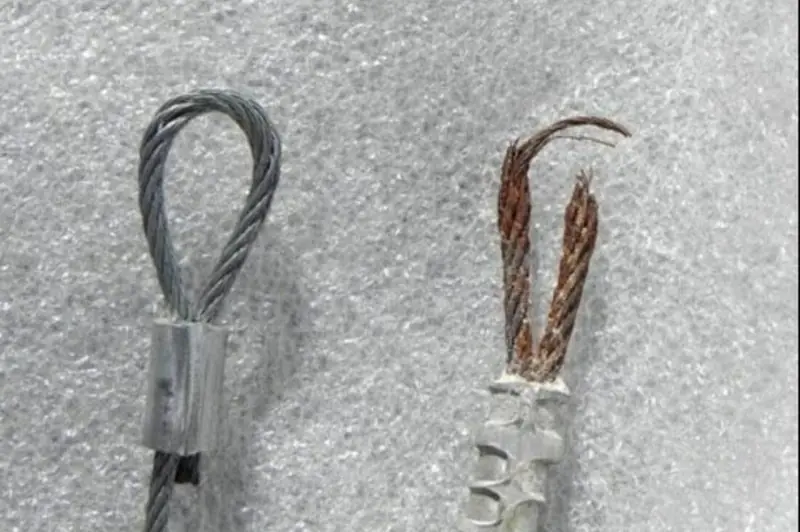
- Broken cable. If one of the lift cables snaps, that side of the door drops unevenly, which very often pulls rollers out of the track on that side. This is one of the more urgent causes since a broken cable also means reduced control over the door's weight.
- Worn or broken rollers. Rollers degrade over years of use, especially with dirt, old grease buildup, and Ottawa's road salt residue accelerating wear. A badly worn roller can eventually pop out of the track during normal operation.
- Loose track mounting. Over years of vibration and thousands of cycles, the brackets holding the track to the garage frame can loosen, letting the track shift slightly out of true alignment.
- Frozen or obstructed door forced by the opener. Continuing to run the opener against a door that's frozen to the ground or otherwise obstructed can bend the track or pull it loose — see our guide on a garage door frozen to the ground for how to avoid this specific scenario.
Why forcing it back into place yourself is a bad idea
It's tempting to try to muscle the door back onto the track, especially if it looks like a simple physical fix. But garage doors are heavy — often 150-400+ lbs depending on size and material — and the track edges are sharp enough to cause real injury. If the door is still under spring tension (which it usually is), there's also risk of the imbalance causing a sudden, uncontrolled movement. This is squarely in professional-repair territory, not a weekend DIY project.
How professional track repair works
- Identify the actual cause — bent track, broken cable, worn rollers, or loose mounting — rather than just pushing the door back into place and hoping it holds.
- Address the root cause first. A bent track section is straightened or replaced; a broken cable is replaced; worn rollers are swapped for new ones.
- Realign the track to proper vertical and horizontal specifications, checking it against the door's actual travel path.
- Reseat the rollers into the corrected track and cycle-test the door through its full range multiple times.
- Check overall balance and hardware condition while everything is accessible, since a derailment often reveals other components close to failing too.
Preventing it from happening again
Routine maintenance catches most of the underlying causes before they escalate to a full derailment — worn rollers and loosening track brackets are visible during a standard inspection long before they cause a problem. See our year-round maintenance schedule for Ottawa for what to check and when, and our post on road salt damage if corrosion is accelerating wear on your hardware.
If a spring or cable failure was the underlying trigger, our guides on spring replacement cost and recognizing spring failure cover that side of it.
Vertical vs horizontal track issues
Garage door tracks have both a vertical section (where the door travels straight up from the closed position) and a curved horizontal section (where it transitions to travel along the ceiling). Problems in the vertical section often show up as a door that sticks or binds low down; problems in the horizontal section more often cause a door to sag, tilt, or refuse to seat properly at the very top of its travel. Knowing which section is misbehaving helps narrow down the likely cause before a technician even arrives.
How a bent track differs from a loose track
A bent track has a physical deformation in the metal itself — often from an impact — and generally needs replacement of that section rather than simple readjustment, since bent metal doesn't reliably return to true even after being straightened. A loose track, by contrast, is often still straight but has shifted position because its mounting brackets loosened over years of vibration; this is usually a more straightforward fix involving re-securing and realigning the track to its correct position rather than replacing material.
Preventive checks that catch this before it becomes a derailment
- Periodically check that track mounting brackets are snug, not just visually present.
- Watch for any new tilt or unevenness in the door as it travels, even minor — this often precedes a full derailment by weeks or months.
- Address worn rollers before they fail completely rather than waiting for a visible problem.
- Keep the area around the door clear of items that could impact the track — bikes, ladders, sports equipment leaned against the garage wall.
After a repair: what to watch for
Once a track has been repaired and realigned, run the door through a few cycles over the following days and note whether it moves smoothly and quietly throughout. Any return of the original symptoms within a short window is worth flagging immediately, since it may indicate the root cause (often a cable or roller issue) wasn't fully addressed rather than a problem with the repair itself.
DIY visual inspection before calling for help
You can safely do a visual-only inspection yourself before calling: with the door fully closed and the opener disconnected via manual release, look along both tracks for any obvious gaps, bends, or spots where a roller sits outside the track channel rather than inside it. Note what you see, but stop there — don't attempt to physically push, pull, or force anything back into position. This visual information alone helps a technician arrive better prepared for what the job likely involves.
How weather plays a role in track problems
Extreme temperature swings, common across an Ottawa year, cause slight expansion and contraction in both the steel track and the door panels themselves. Over many years and thousands of these thermal cycles, mounting hardware can work slightly loose in ways that wouldn't happen in a more climate-stable environment. This is one more reason a periodic hardware tightness check, as part of routine seasonal maintenance, matters more here than in milder climates.
The relationship between track issues and opener strain
An opener working against a slightly misaligned track has to work harder every single cycle, even before the problem becomes visually obvious or produces an obvious noise. This hidden extra strain can shorten an opener's practical lifespan meaningfully if a track issue goes unaddressed for an extended period, which is part of why we always check track alignment as part of any opener-related service call, not just when a derailment is the explicit complaint.
Don't wait for a full derailment
By the time a door fully derails, what could have been a simple realignment often becomes a more involved repair involving bent track sections or damaged rollers. Catching the early signs — a slight tilt, a new scraping sound — well before that point is the difference between a quick fix and a bigger job.
Why identical-looking tracks can behave differently
Two garages with visually similar tracks can behave very differently depending on subtle factors — slightly different door weight, opener force settings, or how square the original opening was framed. This is why a track alignment fix is rarely just "put it back where it was" — a proper repair accounts for your door's specific balance and weight distribution, not just a generic realignment.
The role of the header bracket in track stability
The header bracket, mounted above the door opening where the horizontal track sections attach to the framing, plays an outsized role in overall track stability — if this bracket loosens or its mounting point in the framing weakens, both track sections can shift even if the tracks themselves are structurally fine. This is a less commonly discussed failure point than roller or track-section issues, but it's one we specifically check during any alignment-related service call.
Why a rushed track fix often doesn't last
A track alignment repair done quickly without addressing the underlying cause — a loose bracket, a worn roller still in place, a spring imbalance putting uneven pressure on the track — often shows the same symptoms returning within weeks or months. A proper repair identifies and addresses the root cause of the misalignment, not just the visible symptom, which is why we take the time to check the whole system rather than simply nudging a track back into visual alignment.
If your door has come off track or is sticking partway through its cycle, stop using it and call (613) 884-1488 — we can usually diagnose and repair it the same day across Ottawa.