
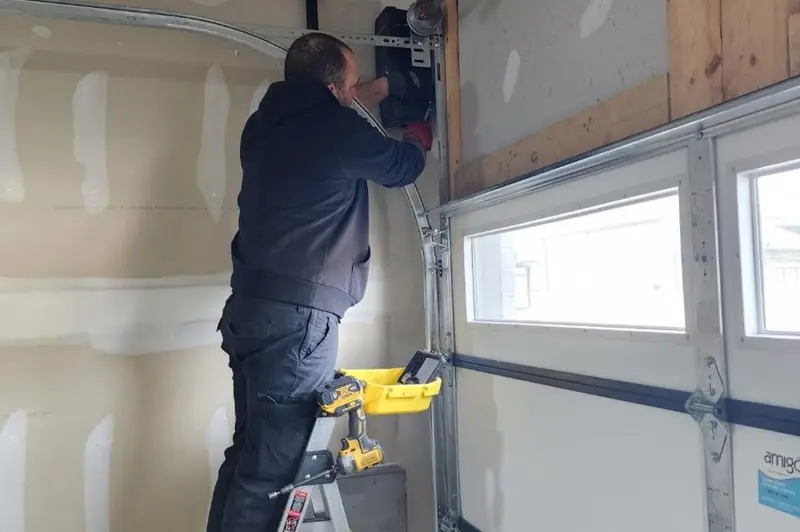
Why sound is such a useful diagnostic tool
Garage doors are mechanically simple enough that different problems tend to produce genuinely distinct sounds. Learning to recognize a handful of common noise patterns lets you make a rough call yourself on whether something is a minor, ignorable issue or a sign to stop using the door and call for help.
Squeaking or chirping
Likely cause: Dry hinges, rollers, or the torsion spring itself lacking lubrication.
Urgency: Low — but don't ignore it indefinitely.
What to do: Apply a garage-door-specific lubricant to hinges, roller stems, and the spring coils. This is genuinely one of the easiest, most effective DIY fixes and often resolves the noise completely within one or two uses of the door.
Grinding or scraping
Likely cause: Worn or damaged rollers, a track that's out of alignment, or debris built up inside the track.
Urgency: Moderate to high — grinding usually means metal-on-metal contact somewhere it shouldn't be, and continuing to use the door can accelerate damage to the track or rollers.
What to do: Visually inspect the track for visible misalignment, dents, or debris. If cleaning doesn't resolve it, the rollers or track likely need professional attention — see our guide on garage door off track: causes and repair.
A loud bang or pop
Likely cause: A broken torsion or extension spring.
Urgency: High — stop using the door immediately.
What to do: Do not attempt to open or close the door with the opener. Call a professional for spring replacement — see our spring replacement cost guide and our post on recognizing spring failure.
Rattling
Likely cause: Loose hardware — bolts, brackets, or the track mounting itself have worked loose over time and thousands of open-close cycles.
Urgency: Low to moderate — worth addressing before loose hardware causes bigger alignment issues.
What to do: Visually check for obviously loose brackets or bolts along the track and tighten what you can safely reach. If the rattling persists or you're not comfortable identifying the source, a professional inspection catches it quickly.
A rhythmic thump or thud during operation
Likely cause: A flat spot on a roller, an uneven joint between panels, or a slightly bent track section.
Urgency: Moderate.
What to do: This is usually a wear-related issue that gets slowly worse rather than resolving itself. Have it inspected before the underlying cause (often a worn roller) leads to a bigger track alignment problem.
Motor humming without the door moving
Likely cause: The opener is trying to run but something is preventing the door from moving — could be a disconnected trolley, an obstruction, or in winter, a door frozen to the floor.
Urgency: High — stop immediately to avoid motor damage.
What to do: Check for obvious obstructions and, in winter, whether the door is frozen — see our guide on a garage door frozen to the ground. If nothing obvious explains it, the opener itself may need diagnosis; see garage door opener not working.
A high-pitched whine from the opener
Likely cause: Motor strain, often from a door that's out of balance and putting extra load on the opener, or aging internal gears.
Urgency: Moderate — addressing the underlying imbalance protects the opener from premature failure.
What to do: Have the door's balance checked; an opener working harder than it should due to poor balance wears out faster regardless of how well-built it is.
General noise reduction beyond diagnosing a specific problem
If your door has always been somewhat noisy rather than developing a new specific sound, see our dedicated guide on silencing a noisy garage door for broader quieting strategies, including whether a belt-drive opener upgrade makes sense — covered in our belt vs chain drive comparison.
Keeping a simple noise log helps more than you'd think
If a noise is intermittent rather than constant, jotting down when it happens — cold mornings only, every single use, only when closing but not opening — gives a technician a genuine head start on diagnosis before they've even arrived. Patterns tied to temperature, time of day, or direction of travel (opening vs closing) often point toward specific causes faster than a general "it's making a noise" description.
Noises that are actually opener-specific, not door-specific
It's worth distinguishing sounds coming from the motor unit itself (mounted on the ceiling) from sounds coming from the door and track system. A clicking or relay sound right at the motor unit when the door isn't even moving often points to the opener's control board or logic board rather than anything mechanical with the door. This is a different category of issue from the track and hardware noises covered above, and usually needs opener-specific diagnosis — see our opener troubleshooting guide.
Why identical-sounding problems can have different root causes
Two doors making what sounds like the same grinding noise to an untrained ear can have entirely different underlying causes — one a worn roller, the other a bent track section. This is exactly why an in-person inspection matters once you've narrowed things down using sound alone; visual and hands-on inspection confirms what the sound is only suggesting.
Don't let a "minor" noise become a bigger bill
Almost every serious garage door failure we see started as a noise that got ignored for months. A cheap lubrication fix or a modest roller replacement, caught early, is a fraction of the cost of the spring, cable, or opener failure that same neglected issue can eventually cause. Treating new noises as worth a few minutes of investigation, rather than background nuisance, is one of the simplest ways to avoid a bigger repair bill down the line.
Recording the sound to help with diagnosis
If a noise is intermittent or hard to describe in words, a short phone video with audio — even just 10-15 seconds — genuinely helps when describing the issue over the phone or to a technician on arrival. Sound is notoriously hard to convey accurately through description alone ("kind of a grinding-squeaking thing"), and a quick recording often communicates far more precisely.
How age of the door affects likely noise causes
A newer door (under 5 years old) making unexpected noise more often points to an installation adjustment issue — slightly off balance, a settling bolt — than to genuine component wear. An older door (15+ years) making new noise is statistically more likely to reflect actual wear on rollers, hinges, or the spring itself simply reaching the end of its practical service life. This isn't a hard rule, but it's a useful starting assumption when trying to gauge urgency.
The value of catching noise changes early
Because so many serious failures (springs, cables, track derailment) announce themselves through a noise change well before actually failing, treating any new or worsening sound as worth a few minutes of attention is one of the single most effective things a homeowner can do to avoid an emergency repair situation altogether.
Trust your instincts on "that doesn't sound right"
You know your door's normal sound better than anyone else, simply from daily exposure. If something sounds different, even if you can't quite describe why, that instinct is usually worth acting on rather than dismissing — better a quick check that finds nothing serious than a delay that lets a small issue become a bigger one.
Noise from the wall or ceiling versus the door itself
Occasionally a homeowner reports a "garage door noise" that's actually coming from the garage's structure itself — a loose ceiling-mounted opener bracket vibrating against drywall, for instance, rather than any door component. If you can, try to pinpoint whether the sound seems to come from the door and track area specifically or from the ceiling and opener mounting area, since this distinction changes where a technician should focus first.
Why some noises only happen in one direction of travel
A noise that occurs only when opening but not closing, or vice versa, often points toward a specific hardware component engaging differently depending on direction — for instance, a worn top roller that only bears significant load during the final stage of opening. Noting the specific direction a sound occurs in, alongside where along the door's travel it happens, gives a technician valuable diagnostic detail before they've even inspected the door in person.
Distinguishing a new noise from a noise you've just started noticing
Sometimes what feels like a "new" noise has actually been present for a while but only became noticeable once a household member's routine changed — working from home, a new baby's nap schedule, or simply paying closer attention after reading a guide like this one. This doesn't mean the noise isn't worth checking, but it's helpful context to mention, since a longstanding minor noise carries different urgency than one that's genuinely appeared suddenly and is worsening quickly.
Not sure which category your noise falls into? Describe it when you call (613) 884-1488 and we can often narrow down the likely cause before a technician even arrives.